Grooming
How often should you groom a double-coated dog?
Huskies, shepherds, goldens and corgis shed like it is their job. Our head groomer explains what helps, what hurts and why you should never shave them.
Sofia Reyes4 min read
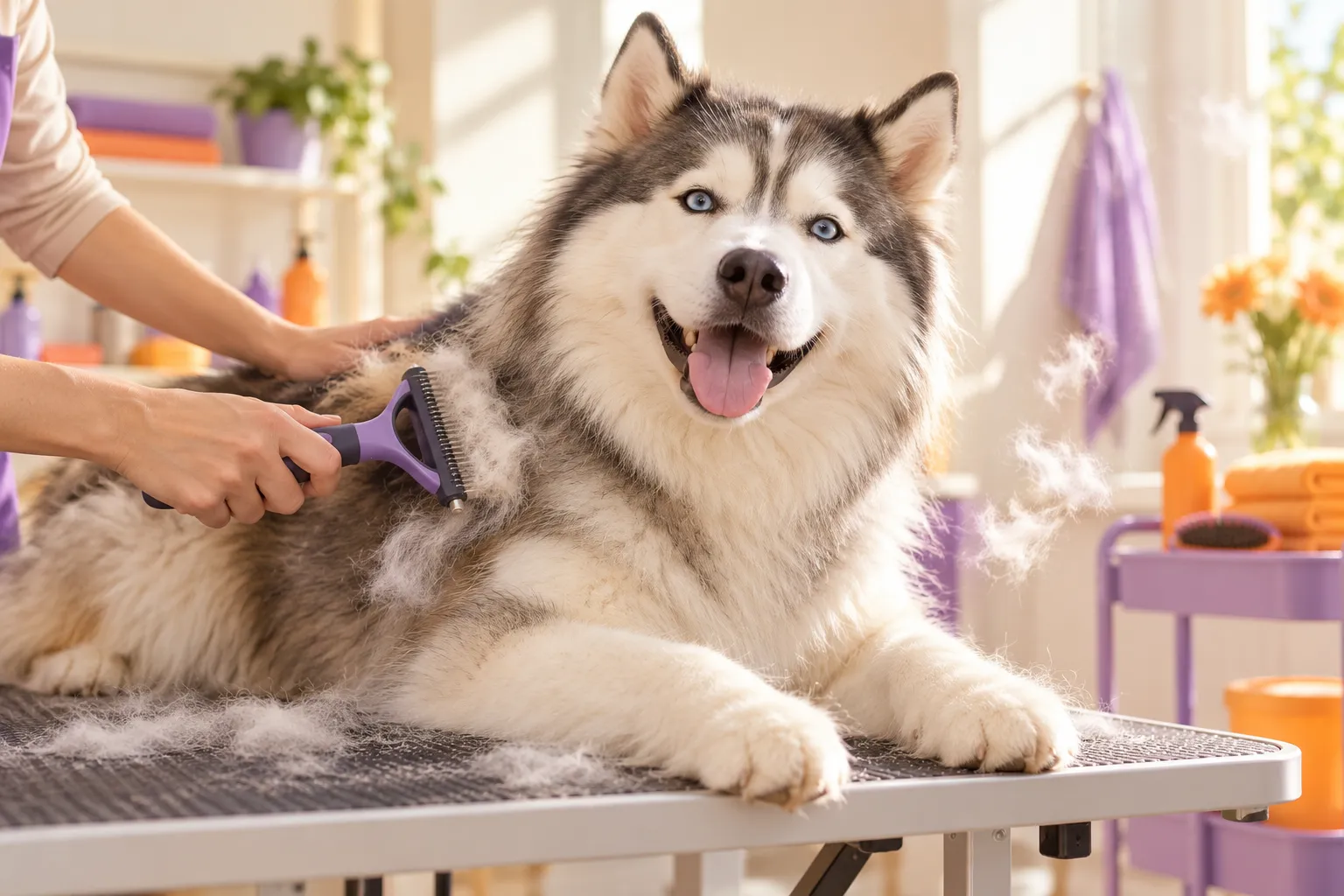
If you live with a husky, German shepherd, golden retriever, Bernese mountain dog or corgi, you already know the tumbleweeds of fur that gather in every corner. Double-coated dogs have a soft, dense undercoat for insulation and longer guard hairs on top. Twice a year, usually spring and fall, they blow that undercoat almost all at once.
A simple grooming rhythm
- Brush at home two or three times a week with an undercoat rake and a slicker brush
- Daily brushing during spring and fall shedding season
- Professional bath and de-shed every 6 to 8 weeks
- Nail trims every 3 to 4 weeks, especially for dogs on soft ground
- Check ears and the fur between paw pads monthly
A professional de-shed uses a high-velocity dryer and special conditioners to loosen the undercoat, which removes far more than brushing alone. Many owners tell us their homes are noticeably cleaner for weeks afterward. Book an extra de-shed visit at the start of each shedding season and you will skip the worst of it.
Please do not shave them
This is the one I wish every owner knew. It seems logical to shave a fluffy dog in summer, but a double coat actually helps regulate temperature and protects the skin from sunburn. Shaving can damage the follicles so the coat grows back patchy, coarse or not at all.
The undercoat is the problem in summer, not the top coat. Remove the fluff and leave the armour.
A tidy around the paws, rear and ears is fine. A full shave-down should only happen for medical reasons, like severe matting, and only on a vet's advice.
Seattle-specific tips
Our damp winters mean double coats can stay wet for hours after a walk, which can lead to hot spots and that famous wet-dog smell. Towel dry thoroughly, paying attention to the armpits, belly and behind the ears. A quick blow dry on cool is even better if your dog tolerates it.
Finally, watch for skin issues during long rainy stretches. Redness, scabs or a sour smell are worth a vet visit. Regular grooming is often how these problems get spotted early, so we always tell you if we see anything unusual.