Repair
Squeal, grind or pulse? What your brakes are telling you
Brake noises are not all bad news, but some mean stop driving today. A quick guide to the sounds our technicians hear every week.
Tasha Greene4 min read
At the service desk I hear people do impressions of their brakes every single day. Some are hilarious. All of them are useful, because the sound tells our technicians where to look first. Here is a translation guide.
The common sounds
- High-pitched squeal when braking lightly: often the built-in wear indicator. Pads are getting low. Book soon.
- Squeal only on cold, damp mornings that goes away: usually surface rust on rotors. Normal.
- Metallic grinding: pads are worn through and metal is touching the rotor. Stop driving and call us.
- Pulsing or vibration in the pedal or steering wheel: uneven rotor surface or pad deposits.
- Clunk when you first press the pedal: possible loose caliper hardware or worn suspension parts.
- Soft or sinking pedal: fluid leak or air in the system. This is a safety issue today.
Performance pads on sports cars can be noisier than standard pads, especially when cold. A little squeal is a trade-off for stronger bite and better heat resistance. A grind never is.
Pay attention to when the noise happens, too. Does it start only after a long drive, only when turning, or only at low speed in a parking lot? Tell the service desk exactly that. A good description can save half an hour of diagnostic time and gets you a more accurate quote.
A squeal is your car asking politely. A grind is your car shouting.
Why heat matters here
Brake fluid absorbs moisture over time, which lowers its boiling point. In Phoenix traffic, with ambient temperatures over 110°F and long descents from the mountains, old fluid can boil and give you a spongy pedal at the worst moment. We recommend a brake fluid flush every two years, or before every track day.
What a proper brake job includes
A cheap pad slap might stop the noise for a while, but it rarely lasts. A real brake service includes measuring rotor thickness and runout, cleaning and lubricating slide pins and hardware, inspecting hoses and calipers and bedding in new pads properly so they grip evenly.
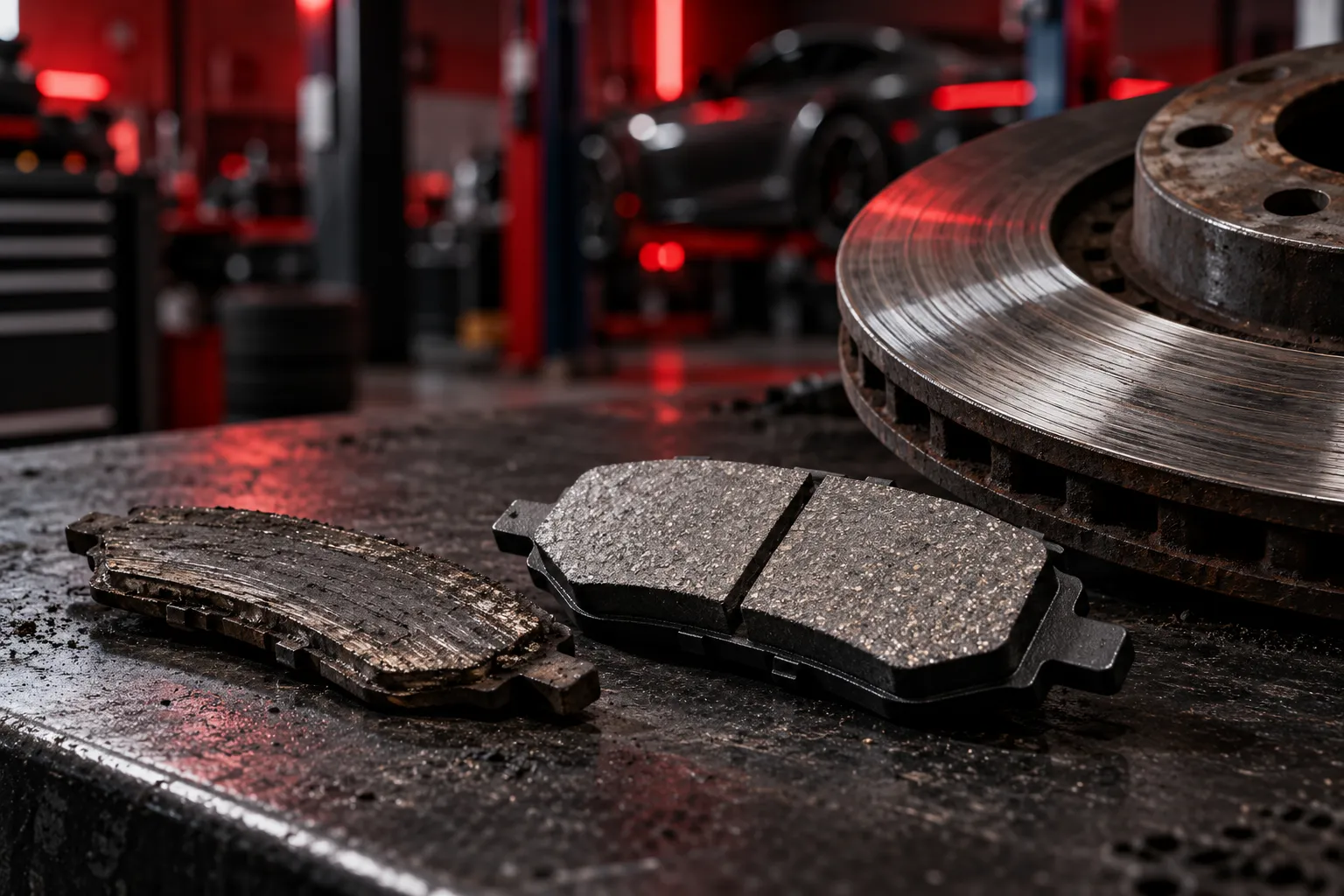
Ours start at $289 per axle with premium ceramic pads and new rotors, and we always show you the old parts next to the new ones. If you are not sure what that noise is, drive in any weekday morning and we will take a look for free.