Comfort
Dental anxiety: what actually helps
Nervous about the dentist? You're in good company. Here are the practical things that make a real difference, from the first phone call to the chair.
Dr. Daniel Okafor5 min read
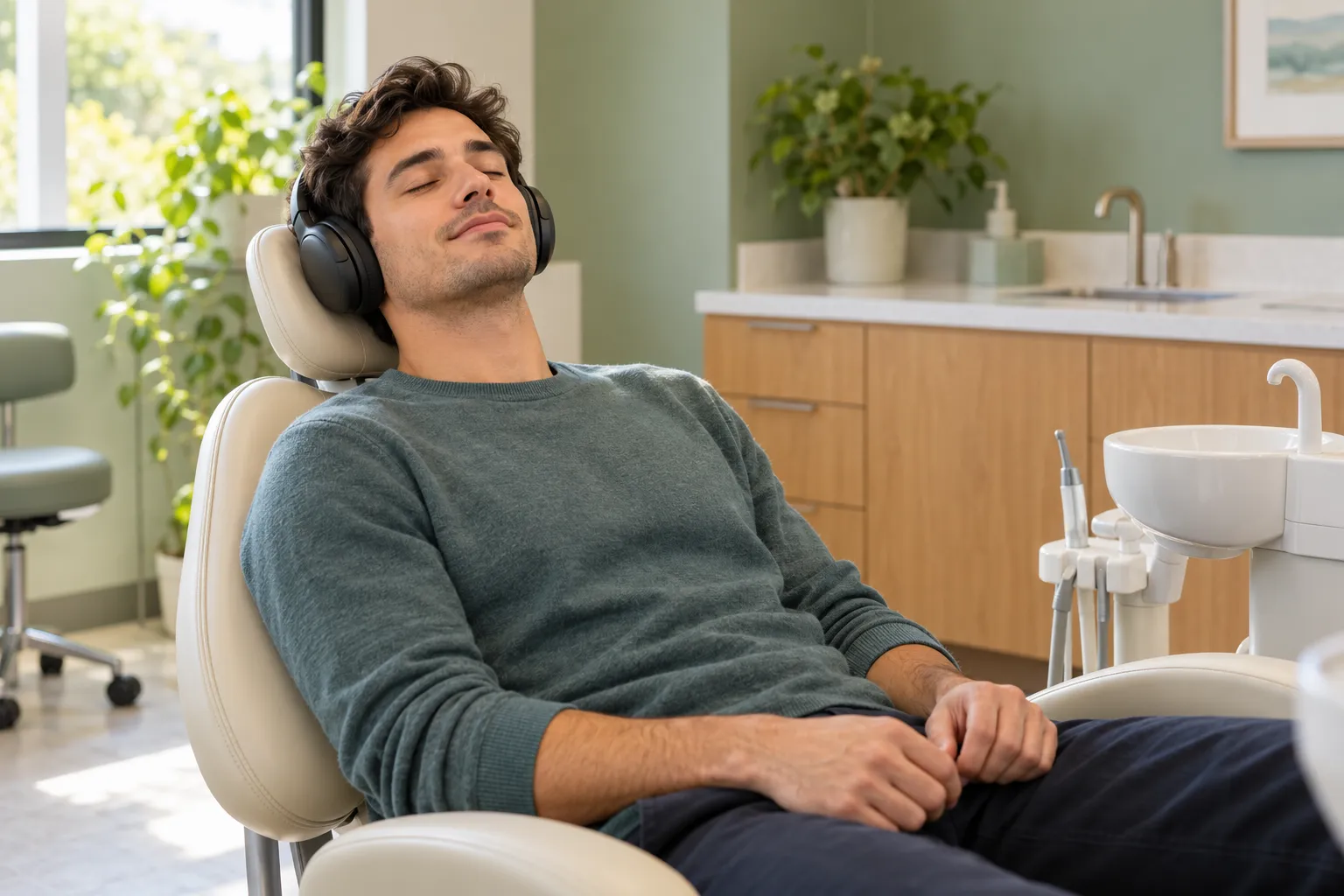
Around one in three adults feels anxious about dental visits, and roughly one in ten avoids them altogether. If that is you, you are not being dramatic. Most dental fear starts with a real experience: a painful filling as a child, a dentist who did not listen, or a bill nobody warned you about.
The good news is that dental fear responds well to a few practical changes. These are the ones we see work, week after week, with patients who had not sat in a chair for years.
Before you book
Tell the practice up front. A good team will not treat it as an inconvenience. At Lumen we flag anxious patients in our system, book them longer slots and make sure the same dentist sees them each time. Ask whether you can have a short meet-and-talk visit first, with no treatment at all. Sitting in the chair while nothing happens is surprisingly powerful.
Pick your time carefully, too. Early morning appointments give you less time to build up dread during the day, and you will not be rushing from work with your heart already racing.
In the chair
Control is the single biggest factor. Most fear comes from feeling trapped, so agree a stop signal with your dentist before anything starts. Raising your left hand is the classic one. Then test it once, early, so you know it works.
- Ask for a tell-show-do approach: what is about to happen, what it will feel like, then do it.
- Bring headphones, or use ours. Masking the sound of the drill helps more than most people expect.
- Ask for topical numbing gel before any injection. It should be standard; make sure it is.
- Breathe out slowly for longer than you breathe in. It calms your nervous system within a minute.
- Ask about a weighted or heated blanket. The pressure is genuinely grounding.
The goal of the first visit is not to fix everything. It is to leave feeling that the next visit will be fine.
When you need a little more help
For some people, practical tweaks are not enough, and that is fine. Nitrous oxide, sometimes called laughing gas, takes the edge off within minutes and wears off completely before you leave, so you can drive yourself home. Oral sedation, a prescribed tablet taken before your visit, gives deeper relaxation for longer treatments, but you will need someone to take you home.
Sedation is not a failure or a shortcut. Plenty of our patients use it for two or three visits, catch up on overdue work, then find routine cleans manageable without it. The best way to beat dental anxiety is a run of visits that go well. Start small, and let the good experiences pile up.