Family
Your child's first dental visit: a parent's guide
When to go, what to expect and how to make the first appointment something your kid actually looks forward to.
Dr. Sofia Marín4 min read
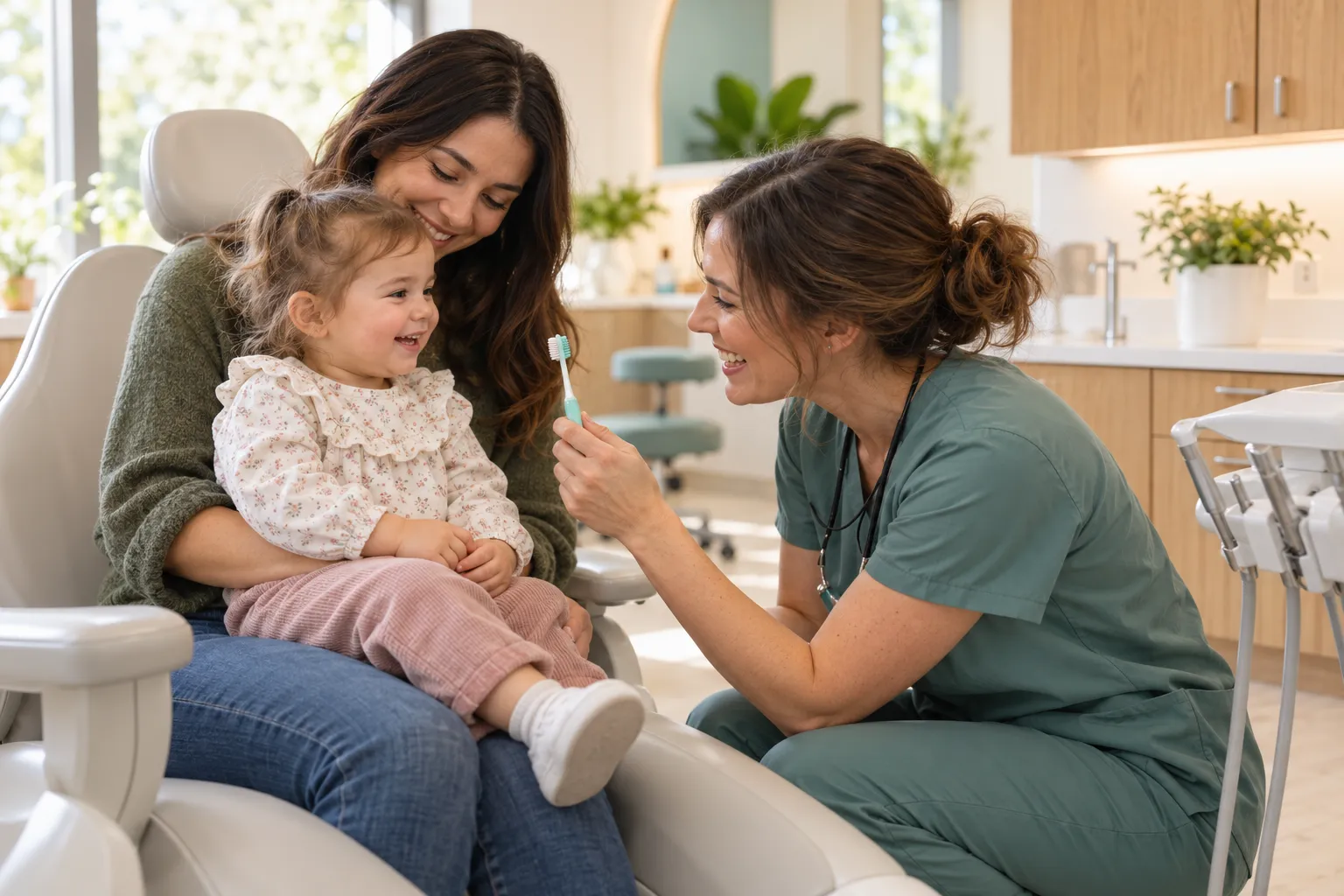
The American Academy of Pediatric Dentistry recommends a first dental visit by your child's first birthday, or within six months of their first tooth. Many parents are surprised by that. One year old feels early, especially when there are only a handful of teeth to look at.
But the first visit is not really about teeth. It is about catching early problems, giving you practical advice, and letting your child learn that the dental office is a friendly, ordinary place before they ever need a filling.
What actually happens
For babies and toddlers we use a knee-to-knee exam. You sit facing your dentist with your child lying back across both laps, head in our lap, so they can see your face the whole time. We count teeth, check gums and the bite, look for early signs of decay and gently brush with a smear of fluoride toothpaste. It takes about five minutes. Some children cry, which is completely normal and actually makes it easier to see.
The rest of the visit is a conversation with you about brushing, bottles, thumb-sucking, teething and diet.
How to prepare your child
- Book a morning slot, when toddlers are rested and fed.
- Read a picture book about visiting the dentist in the week before.
- Play dentist at home: count their teeth with a toothbrush, then let them count yours.
- Avoid words like hurt, needle or drill, even to say it won't happen.
- Bring a favourite toy so they have something familiar to hold.
Your calm is contagious. Children read our faces long before they understand our words.
Habits that matter most at home
Brush twice a day as soon as the first tooth appears, using a rice-grain smear of fluoride toothpaste until age three and a pea-sized amount after that. Parents should do the brushing until children can tie their own shoes, which is a good rule of thumb for the dexterity it takes.
Avoid putting babies to bed with milk or juice in a bottle, and keep sticky snacks and sweet drinks to mealtimes rather than grazing through the day. Frequency matters more than quantity when it comes to sugar. Water between meals is the single best habit you can give a small child. Do these things, keep up six-monthly visits, and most children reach their teenage years without a single filling.