Guides
How to run a food drive pantries actually want
Canned green beans are fine. But a little planning turns your office or school drive into something that feeds families far better.
Priya Natarajan5 min read
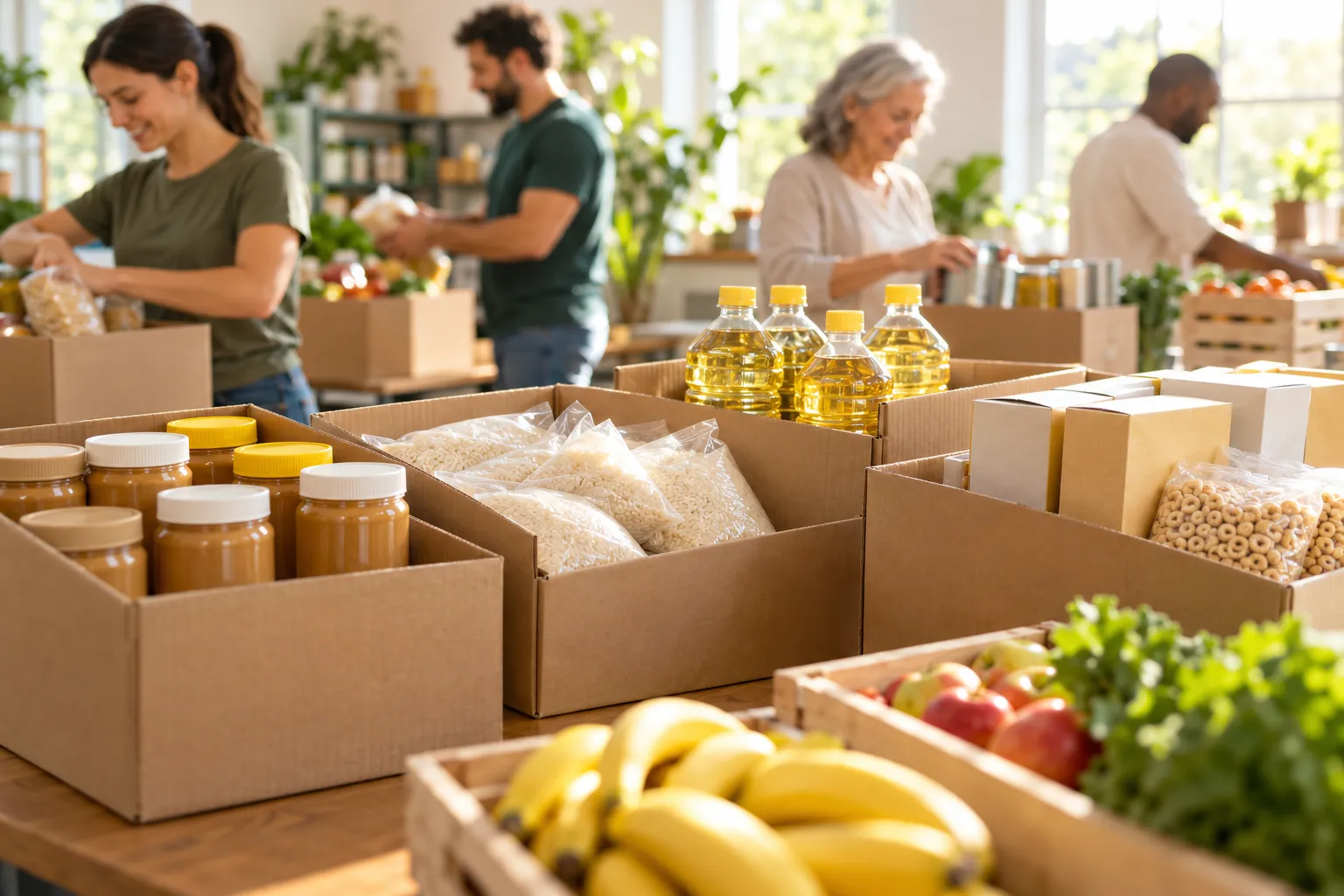
Every November our dock fills with boxes from schools, offices and congregations. We are grateful for every one of them. We also see, year after year, the same things that make drives harder for pantries than they need to be. Here is how to make yours count.
Ask before you collect
The best food drive starts with a phone call. Pantries know exactly what they are short on, and it changes month to month. In late summer it might be cereal for kids out of school. In winter it is often cooking oil and spices. Call us or your local pantry and ask for a short list.
Then put that list on your flyer instead of a generic request for canned goods. Specific asks get specific results.
The most-requested items
- Cooking oil, salt and spices, which families rarely get from pantries
- Peanut butter and canned fish or chicken for protein
- Low-sugar cereal and oatmeal
- Rice and dried beans in 1 to 2 lb bags
- Diapers, wipes and menstrual products, which food stamps cannot cover
- Pop-top cans for neighbours without a can opener
Please skip glass jars, homemade food, anything opened or expired, and the forgotten can of artichoke hearts from the back of the cupboard. Pantries have to sort and often throw these away, which costs volunteer time.
A drive that asks what people need feeds twice as many families as one that asks what people have.
Consider a fund drive
This is the part people resist, but it is true: money goes further than cans. Because we rescue food and buy at wholesale, a $10 donation turns into about 30 meals. Ten dollars spent at a supermarket buys a handful of items.
Many groups now run hybrid drives. Collect food for a visible, hands-on week, and set up a team fundraising page alongside it. Offices often add a matching gift to make the online side more fun.
Finally, book your drop-off. Our dock is busiest on Monday mornings, so Tuesday to Thursday afternoons are ideal. We will weigh your donation, send you a total and a thank-you photo for your newsletter, and tell you exactly which neighbourhood it fed.