Food rescue
Why perfectly good food gets thrown away
It is rarely about safety. Here is what actually sends edible food to the dumpster, and what we do about it every morning.
Marco Ruiz4 min read
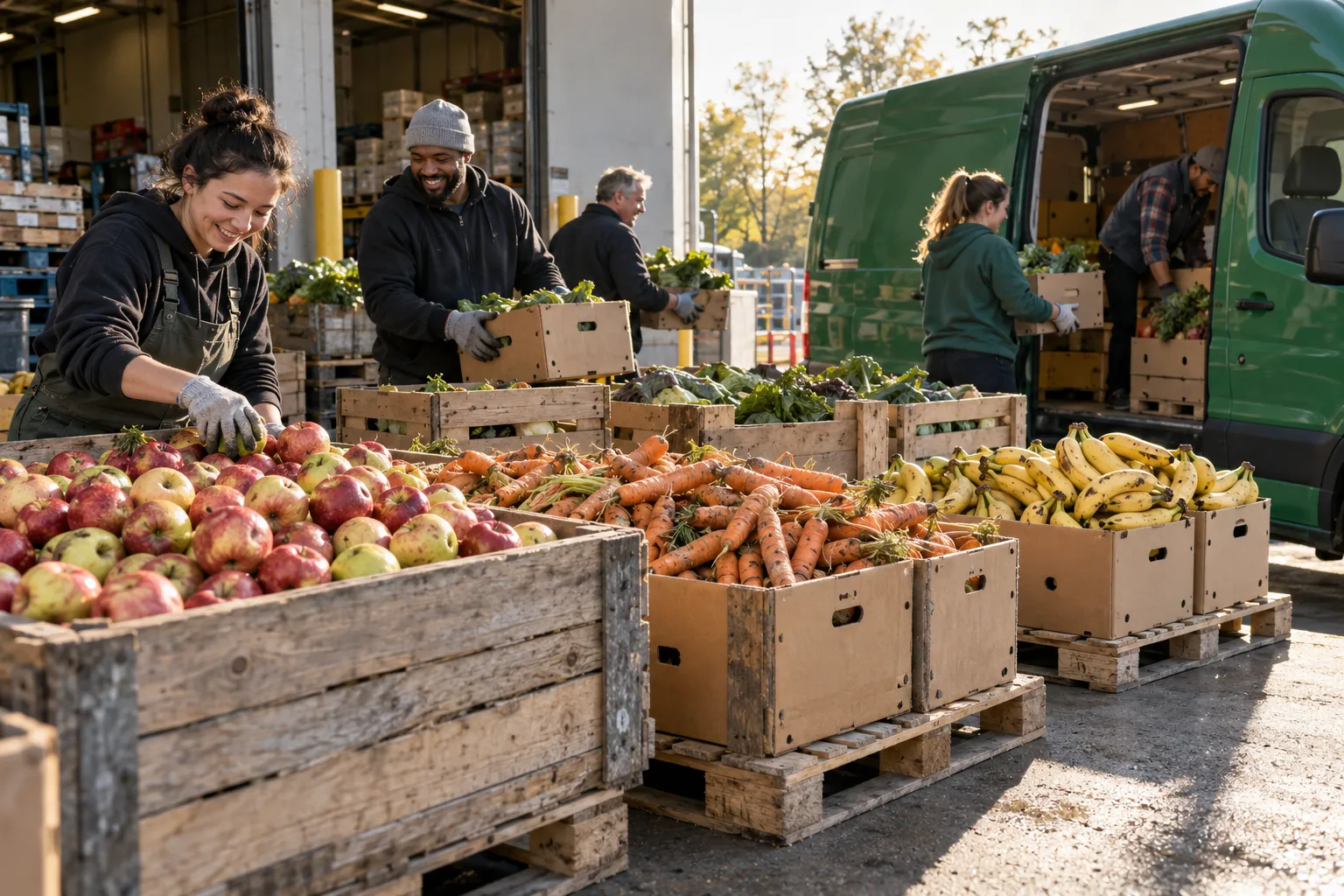
People are often surprised when they see what comes off our vans. Crates of nectarines. Whole wheels of cheese. Pallets of yogurt with ten days left on the date. The question we hear most is simple: why would anyone throw this away?
After ten years of picking up from grocers, farms and kitchens, the honest answer is that most waste is a logistics problem, not a quality problem. Food gets thrown away because it is in the wrong place at the wrong time.
The usual reasons
- Date labels. Sell-by and best-by dates are about peak quality, not safety, but stores pull products days before them.
- Cosmetic standards. A bruised apple or a crooked carrot will not sell at full price, so it never reaches the shelf.
- Over-ordering. Stores would rather toss a little than face empty shelves, so they order more than they sell.
- Packaging changes. When a brand updates its label, the old stock can become unsellable overnight.
- Event leftovers. Caterers prepare for the guest list, not the people who actually turn up.
None of these make food unsafe. They make it inconvenient to sell. That gap between edible and sellable is exactly where food rescue lives.
Why speed matters more than storage
The traditional food bank model relies on shelf-stable goods that can sit in a warehouse for months. Fresh food does not work that way. A case of strawberries has maybe two good days left when a grocer hands it to us. If it waits for a weekly distribution, it is compost.
So we built everything around time. Fixed morning routes, refrigerated vans with temperature logs, and partners who have told us in advance what they can use. Most of what we pick up at dawn is in someone's kitchen by dinner.
We do not ask what is left over. We ask who needs it today, and we drive.
What businesses can do
If you run a grocery store, restaurant, farm or catering company, donating surplus is easier than most people think. The federal Bill Emerson Good Samaritan Act protects good-faith food donors from liability, and donations of inventory are generally tax-deductible. We handle pickup, temperature tracking and the receipt.
Start small. One weekly pickup of bakery surplus can feed dozens of families. Call our pickups line and we will set up a route that fits your back dock, not ours.