Winter
How to keep your pipes from freezing this winter
A frozen pipe can split and dump hundreds of gallons into your basement. These are the steps our technicians take in their own homes before the first hard freeze.
Darnell Hayes5 min read
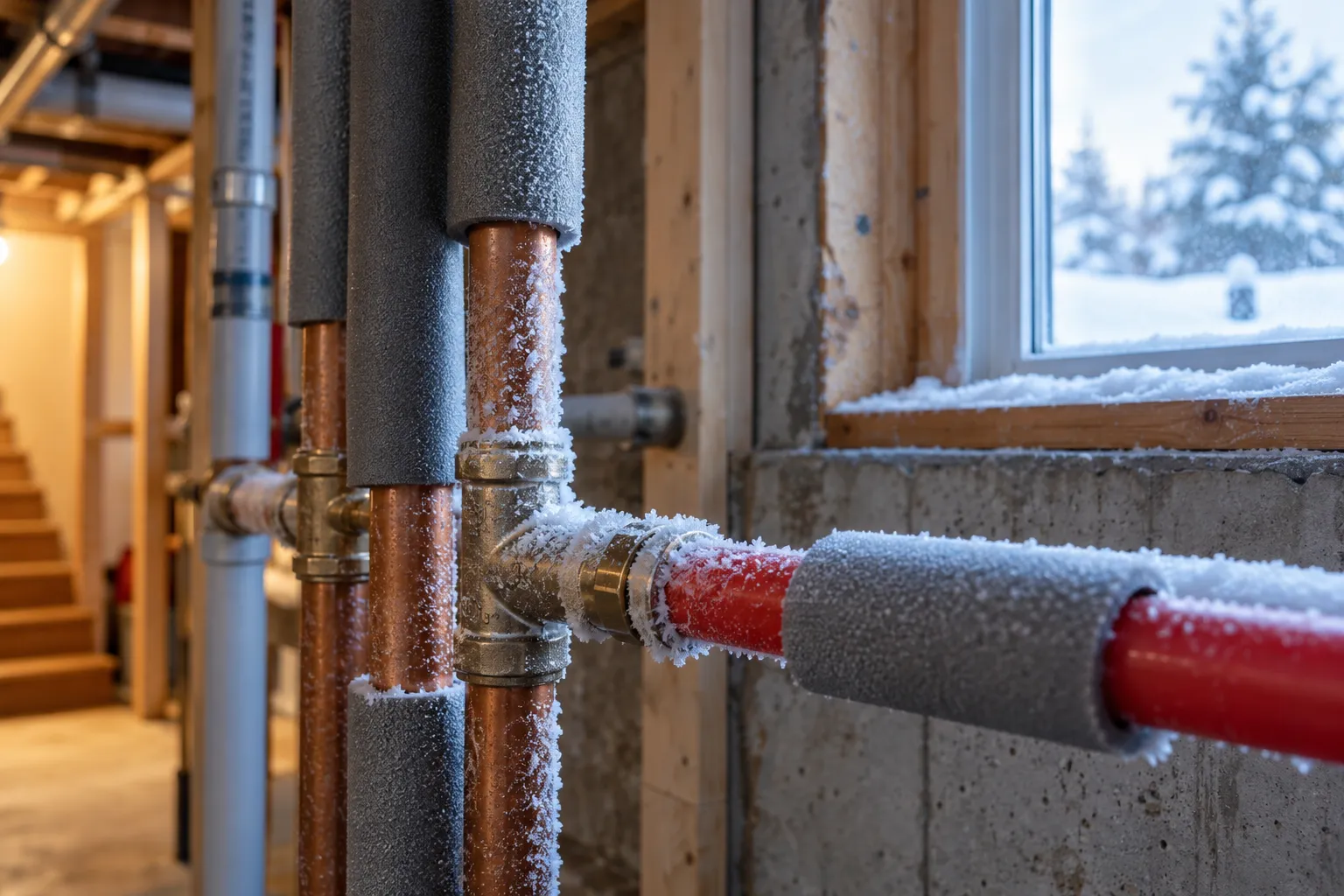
Every January, when Columbus drops into single digits for a few nights, our phones light up. Most of the calls are frozen and burst pipes, and almost all of them could have been prevented with an hour of work in October.
A pipe does not burst where the ice forms. It bursts where pressure builds between the ice and a closed tap. That is why a split often appears in a warm wall, far from the cold spot that caused it.
Where pipes freeze first
In Central Ohio homes, we see the same trouble spots over and over:
- Outdoor hose bibs that were never shut off from inside
- Supply lines in exterior walls under kitchen sinks
- Crawl spaces and unheated basements with gaps around the rim joist
- Pipes running through attached garages
- Bathrooms added above garages or porches in later renovations
What to do in October
Start outside. Disconnect every garden hose, then find the shut-off valve for each outdoor tap inside the basement, close it and open the outside tap to drain what is left. If your home has frost-free hose bibs, they still need the hose removed, or water trapped in the hose will freeze back into the valve.
Next, look for cold air getting in. A can of expanding foam around rim joist gaps and dryer vents costs less than ten dollars. Foam pipe sleeves on any exposed lines in a crawl space or garage cost about a dollar a foot and are easy to fit yourself.
Most burst pipes we repair are within three feet of an air leak. Seal the draught and you usually save the pipe.
On the coldest nights
When the forecast drops below 10 degrees, open the cabinet doors under sinks on outside walls so warm room air can reach the pipes. Let the coldest tap in the house drip slowly; moving water is much harder to freeze, and it relieves pressure if ice does form. Keep the thermostat at 60 or higher even if you are away.
If a tap only trickles on a cold morning, the line may already be partly frozen. Turn off the main water valve, open the tap and warm the pipe gently with a hair dryer, working from the tap back toward the cold section. Never use an open flame.
If you see water, hear hissing in a wall or cannot find the frozen section, shut off the main and call us. Catching it before it splits is the difference between a $200 visit and a $9,000 insurance claim.