Buying guides
Tank or tankless: which water heater fits your home?
Tankless heaters promise endless hot water and lower bills, but they are not right for every house. Here is how we help Columbus homeowners decide.
Simone Coleman6 min read
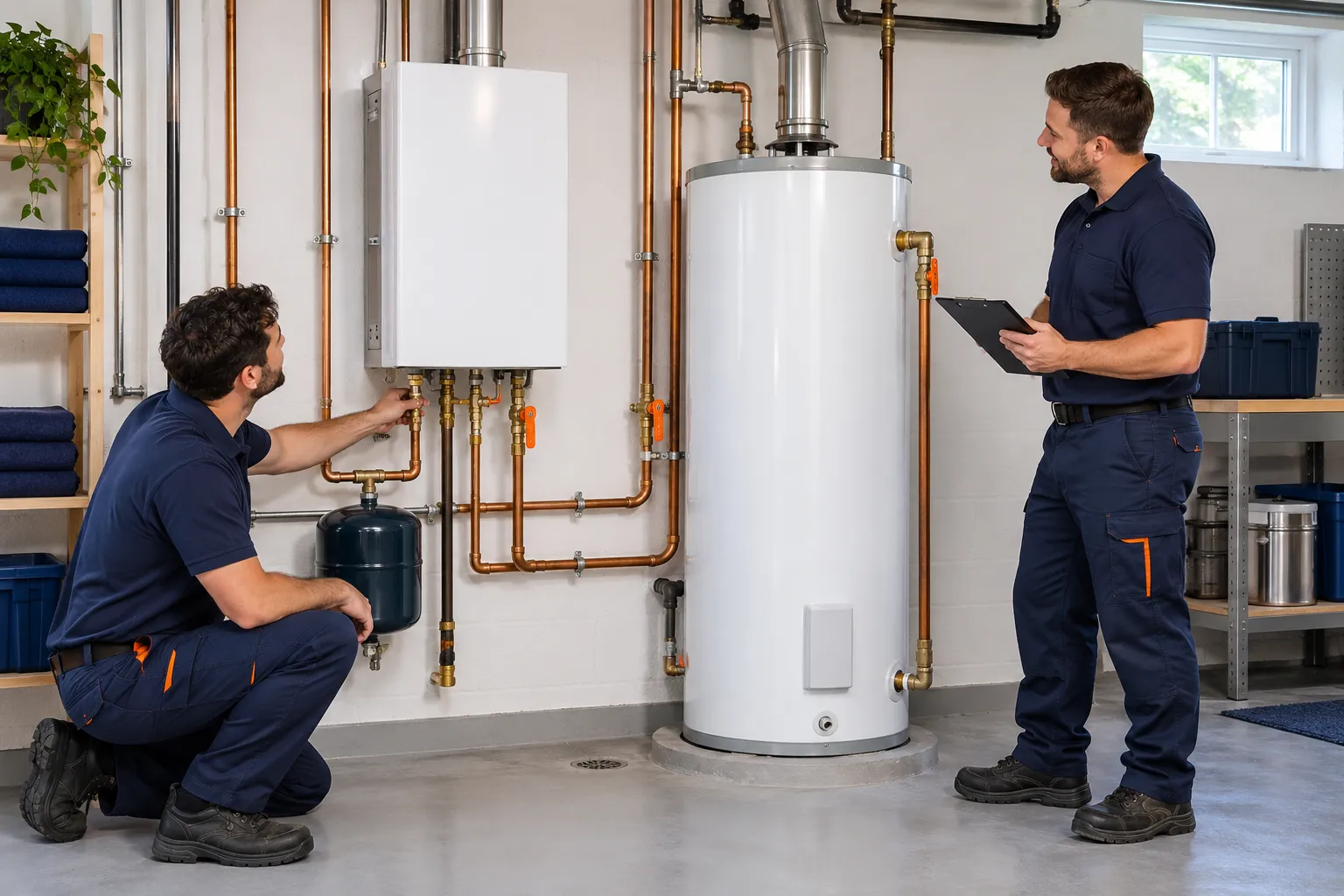
Most water heaters last 10 to 12 years in Columbus, where our moderately hard water slowly builds sediment in the tank. When yours starts rumbling, leaking at the base or running out of hot water halfway through a shower, it is time to choose a replacement. The big question is whether to stay with a tank or switch to tankless.
How each type works
A tank heater keeps 40 or 50 gallons hot around the clock, ready to use. A tankless unit heats water only when a tap opens, using a powerful burner and a heat exchanger. One stores heat; the other makes it on demand.
That difference drives everything else: cost, efficiency, space and how many showers you can run at once.
Comparing the two
- Installed cost: about $1,650 to $2,100 for a gas tank, $4,200 to $5,800 for tankless
- Lifespan: 10 to 12 years for a tank, 18 to 20 for a well-maintained tankless
- Running cost: tankless typically saves $90 to $150 a year on gas
- Space: a tank needs a closet; tankless mounts on a wall
- Hot water supply: a tank can run out, tankless will not, but flow is limited by size
Tankless makes the most sense for households that plan to stay in their home for a decade or more, have three or more people showering back to back, or need to reclaim basement space for a finished room.
A tank still wins when budgets are tight, when the gas line or venting would need expensive upgrades, or when the house might be sold within a few years. Converting an older home can add $800 to $1,500 for a larger gas line and new venting through the wall.
The right water heater is the one that matches how your family actually uses hot water, not the one with the best brochure.
Do not skip maintenance
Whichever you choose, maintenance decides how long it lasts. Tanks should be flushed once a year to clear sediment, and the anode rod checked every three years. Tankless units need an annual descaling with a vinegar solution, which takes about an hour.
If you are unsure, ask for an in-home estimate. We will look at your gas line, venting and household size, then give you a flat price for both options side by side so you can make the call with real numbers.