Wine
A sommelier's guide to wine with smoke and char
Fire changes food, so it should change the way you pick wine. Andre Mitchell on what works, what clashes and why acidity is your friend.
Andre Mitchell5 min read
Wood-fired cooking adds a layer of flavour that most wine-pairing advice ignores. Smoke, char and caramelisation change how a dish tastes, and they can make a beautiful wine fall flat or turn a modest bottle into something memorable. After six years of pairing wine with our hearth, here is what I have learned.
Lean on acidity, go easy on oak
Smoke and char bring bitterness and richness. Wines with bright acidity cut through both and refresh your palate between bites. Heavily oaked wines, on the other hand, tend to double up on smoky, toasty flavours until everything tastes like a campfire. That is why our list leans toward cooler climates and lighter hands in the cellar.
Tannin needs care too. With fatty, aged beef, firm tannins are welcome. With smoky vegetables, they can taste harsh. Match the weight of the wine to the weight of the dish, not to its colour.
Pairings that work at our table
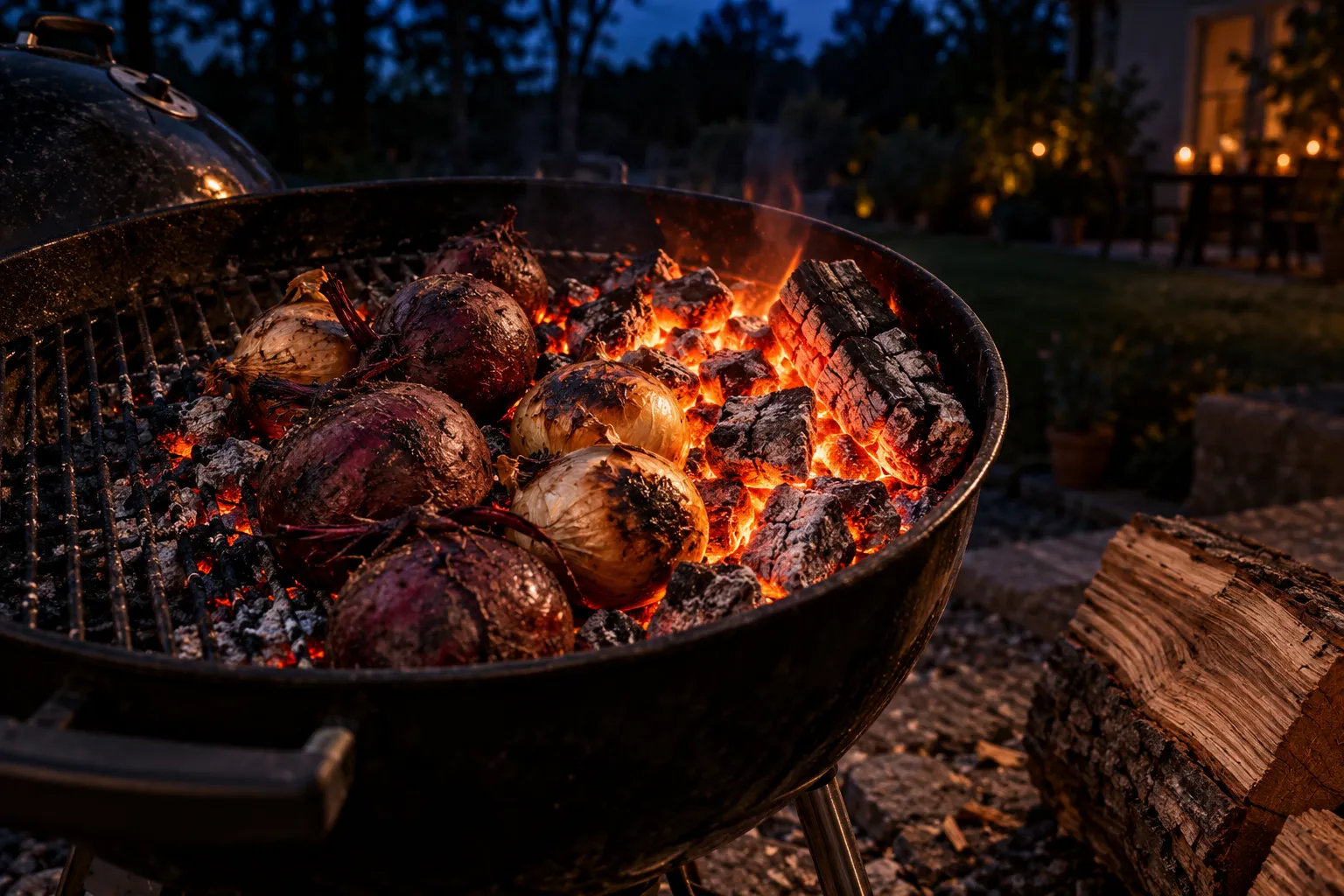
- Ember-roasted vegetables: skin-contact whites or dry rosé, which have texture without heavy tannin.
- Grilled fish and shellfish: Grüner Veltliner, Chablis or crisp Jura Chardonnay.
- Roast chicken and pork: Gamay, Beaujolais crus or light Pinot Noir, slightly chilled.
- Duck and game: Northern Rhône Syrah or Loire Cabernet Franc.
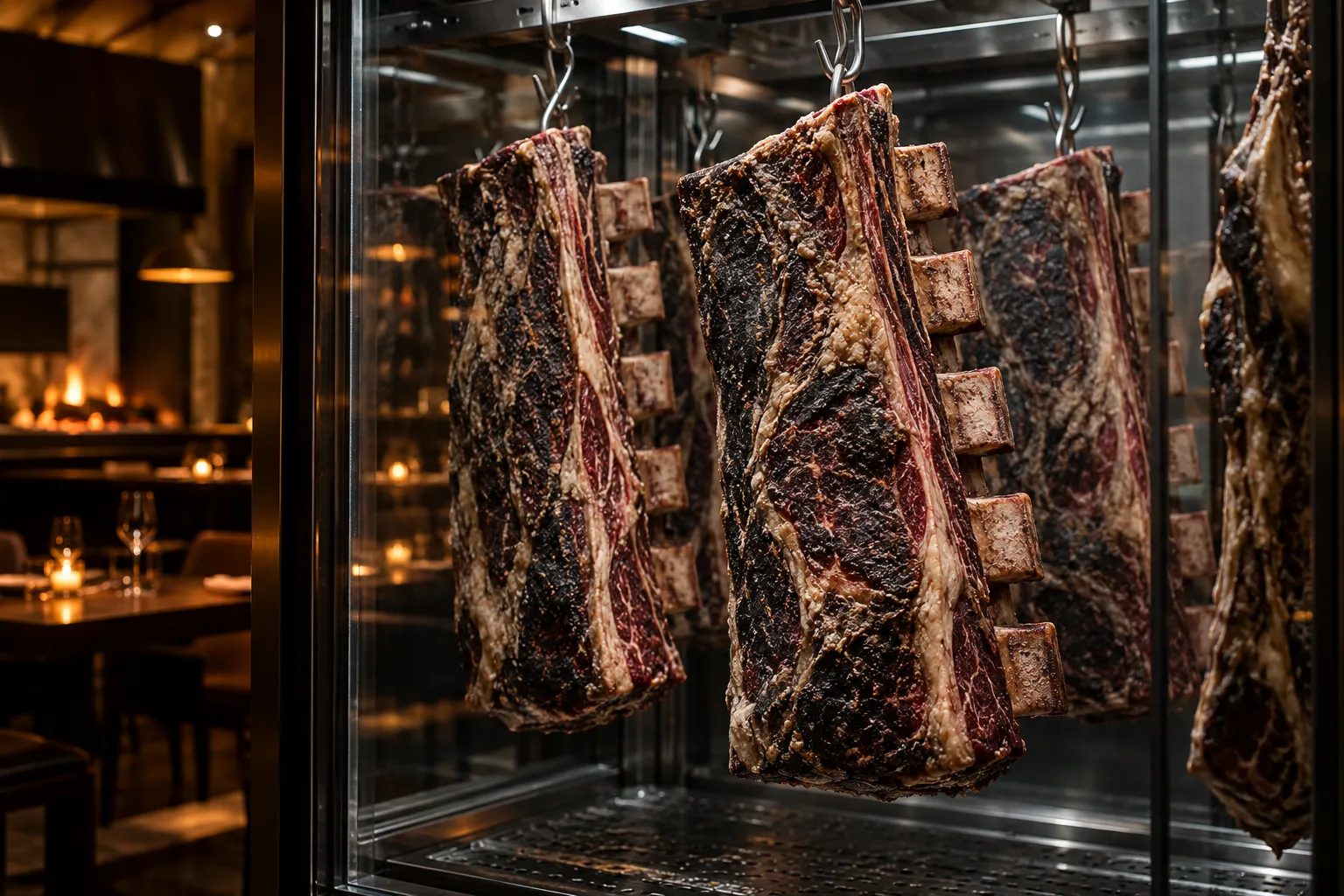
- Dry-aged beef: Nebbiolo, old-vine Rioja or a mature Bordeaux.
If the dish is smoky, the wine should be bright. Let the fire bring the depth and the wine bring the lift.
Try orange wine
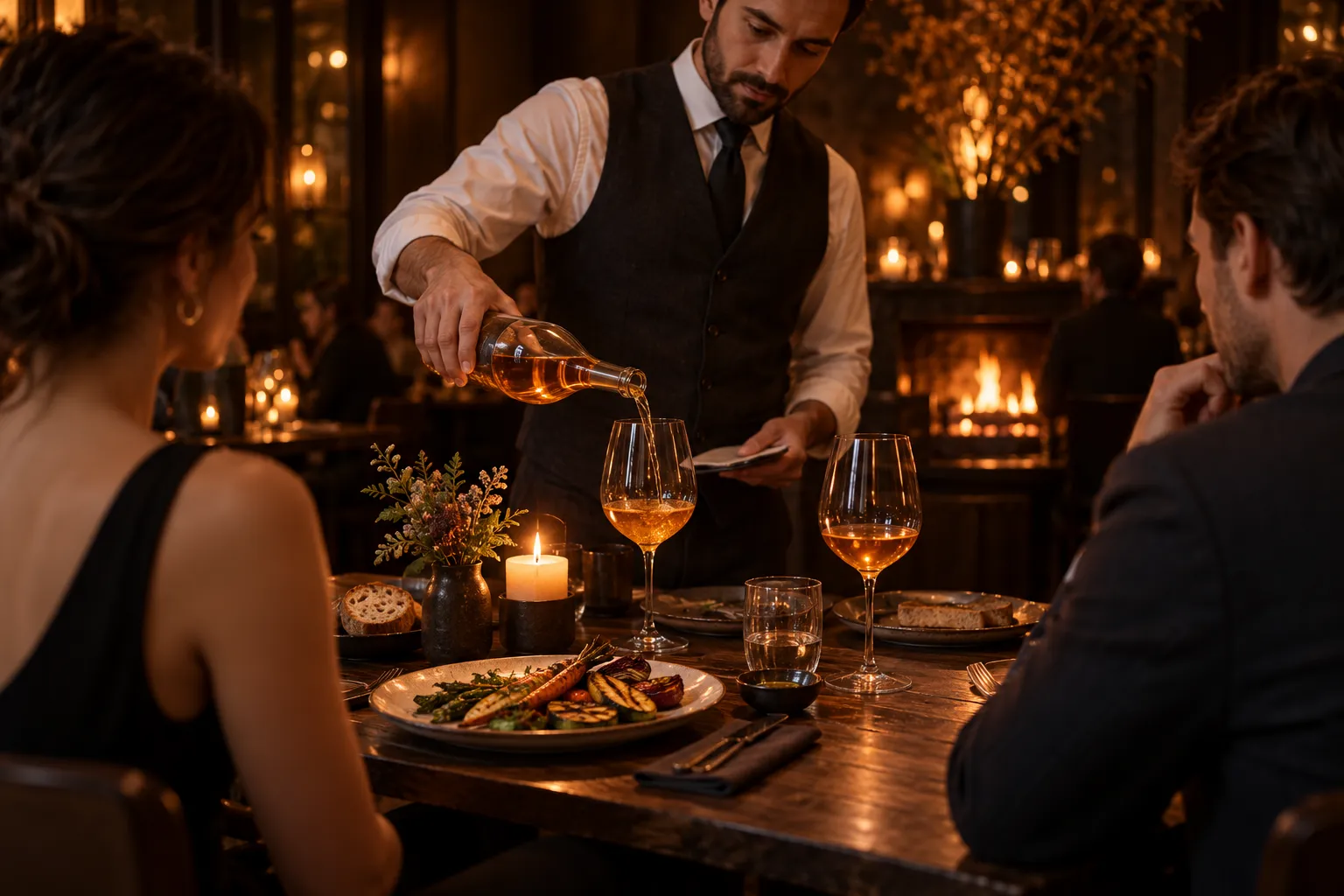
If there is one style I recommend more than any other with wood-fired food, it is skin-contact white wine, often called orange wine. Made by leaving white grapes on their skins, these wines have the freshness of a white and some of the grip of a red. Their savoury, slightly nutty character sits naturally alongside char and smoke.
Do not be afraid of serving reds a little cooler than you are used to, either. Twenty minutes in the fridge brings a light red to around 58 degrees, where its fruit and acidity really shine against grilled food. We store our lighter reds at cellar temperature for exactly that reason.
Most of all, trust your own taste. A pairing is a suggestion, not a rule. If you love a big Napa Cabernet with your ribeye, order it. Our job is simply to help you find something you will enjoy.