Kitchen
Why we dry-age our own beef
Inside the glass-fronted ageing room at the back of our kitchen, and what 45 days does to a ribeye.
Hannah Lindqvist4 min read
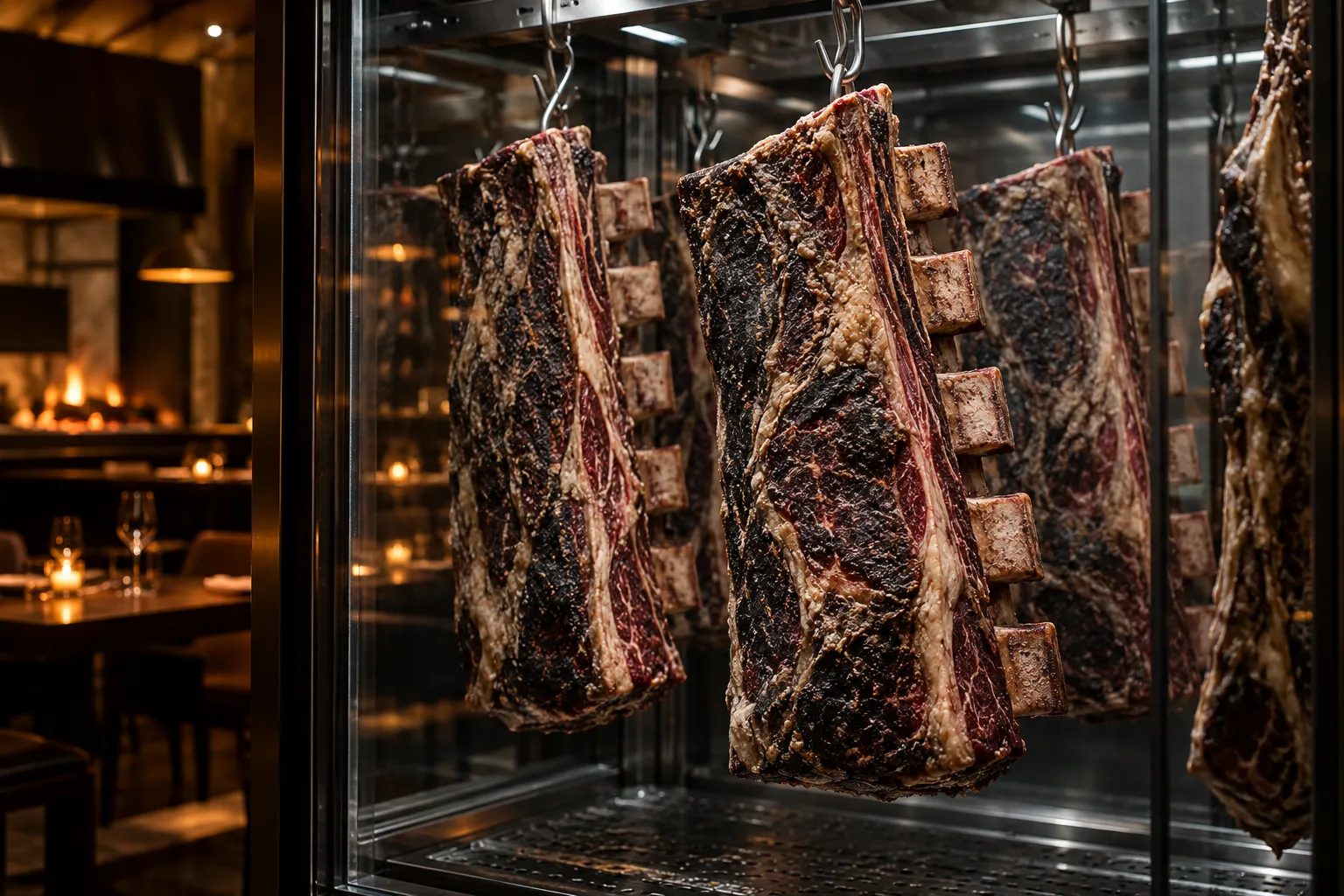
At the back of our kitchen is a glass-fronted room kept at 34 degrees and 80 percent humidity, with a fan running day and night. Inside, whole bone-in ribs of beef hang for between 30 and 60 days. Guests who walk past on the way to the restroom often stop to stare. We understand why.
What dry-ageing actually does
Two things happen while the beef ages. First, moisture evaporates from the meat, concentrating its flavour. A rib can lose up to a quarter of its weight over 45 days. Second, natural enzymes break down muscle fibres and connective tissue, making the meat noticeably more tender.
The flavour change is what people remember. Young beef tastes clean and mineral. At 30 days it becomes richer and nuttier. By 45 to 60 days it develops notes that remind people of blue cheese, toasted hazelnuts and brown butter. It is not subtle, and that is the point.
Why we do it ourselves
Buying pre-aged beef would be easier and, honestly, cheaper. But doing it in-house lets us choose exactly which animals we age and for how long. We buy whole ribs from two farms: Slagel Family Farm in Fairbury, Illinois, and a small grass-finished herd in southern Wisconsin.
- 21 days: tender, clean and beefy. Good for guests new to aged beef.
- 35 days: our standard ribeye. Deeper, nuttier, still balanced.
- 45 days: rich and savoury, with gentle funk. Our chef's choice.
- 60 days: intense and complex. Limited, served on Fridays only.
Ageing is not about hiding anything. It is about letting good beef become the most honest version of itself.
Nothing goes to waste
When a rib comes out of the ageing room, the dark, dried outer crust has to be trimmed away. We do not throw it out. The trim is rendered into fat for roasting potatoes, folded into butter for our hearth bread and occasionally turned into candles that burn on the tables. The bones become the base of our red wine jus.
If you want to try aged beef at its best, order the 24-ounce ribeye for two, cooked medium-rare over oak and rested beside the fire. Ask your server which age is on that night. It changes more often than you would think.