Essay
Designing for Nordic light
Six hours of daylight in December, nineteen in June. How we shape windows, depth and orientation for both.
Sigrid Aalto Holm5 min read
In Oslo the sun rises at nine in late December and sets before half past three. In June it barely leaves the sky. Designing for that range is the central problem of Scandinavian architecture, and the reason so many of our decisions begin with a sun-path diagram rather than a plan.
Daylight also matters for health. Long, dark winters affect sleep and mood, and research from Scandinavian universities consistently links access to morning light with better wellbeing. A kitchen that catches the sunrise is not a luxury this far north.
Low sun is precious
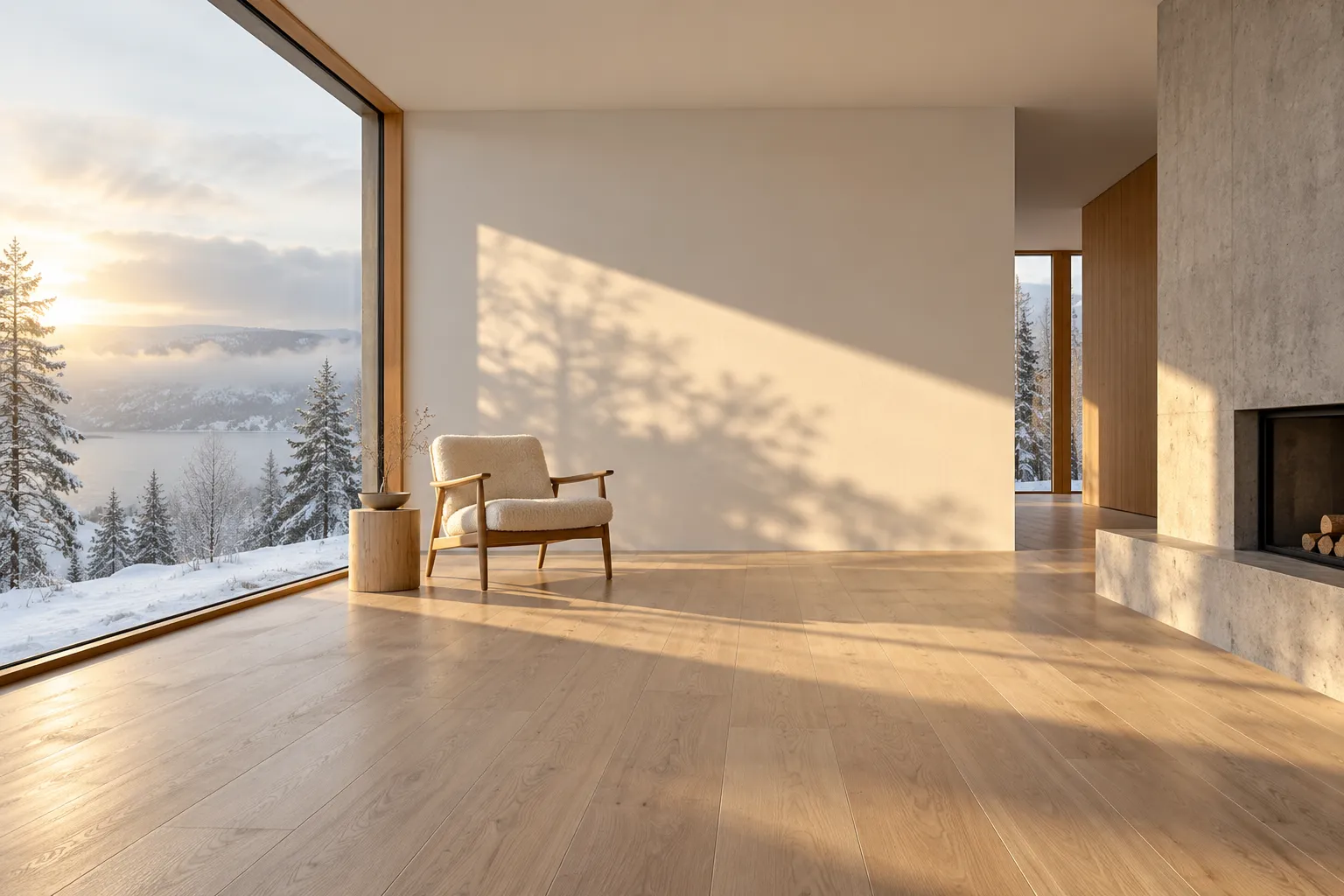
Winter light arrives almost horizontally. A tall window facing south or south-west can carry it deep into a room, across the floor and up the back wall. We place the rooms used on winter afternoons, usually the kitchen and living spaces, where they can catch those last few hours.
Our rules of thumb for daylight in the north:
- Window heads close to the ceiling bring light furthest into a room.
- Deep reveals soften glare and make the edge of a window glow.
- Pale floors in oiled ash or limed pine bounce light upward.
- North light is steady and kind for studios and reading rooms.
- Roof lights give two to three times more daylight than a wall window of the same size.
Summer needs shade, not just glass
Large south-facing glazing can overheat a room in June, even this far north. External shading, roof overhangs and operable windows on opposite walls allow cross-ventilation and keep rooms comfortable without mechanical cooling. Deciduous trees help too, offering shade in summer and letting light through in winter.
We do not try to fill a house with light. We try to give each hour of the day a place to land.
Light shapes mood
The best Nordic rooms are not uniformly bright. They move from a bright window seat to a darker, quieter corner, so you can choose where to be depending on the season and your mood. That gradient is something we model physically, with a lamp and a cardboard room, long before any rendering. It remains the most reliable tool we have.
For clients, the practical lesson is simple: visit your site in winter before you commit to a design. Stand where the living room might be at two in the afternoon in December, and notice where the light actually reaches. That single visit will tell you more than any brochure.