Process
How to brief an architect for a new house
The best briefs describe a life, not a list of rooms. Here is what to prepare before the first meeting.
Mikkel Strand6 min read
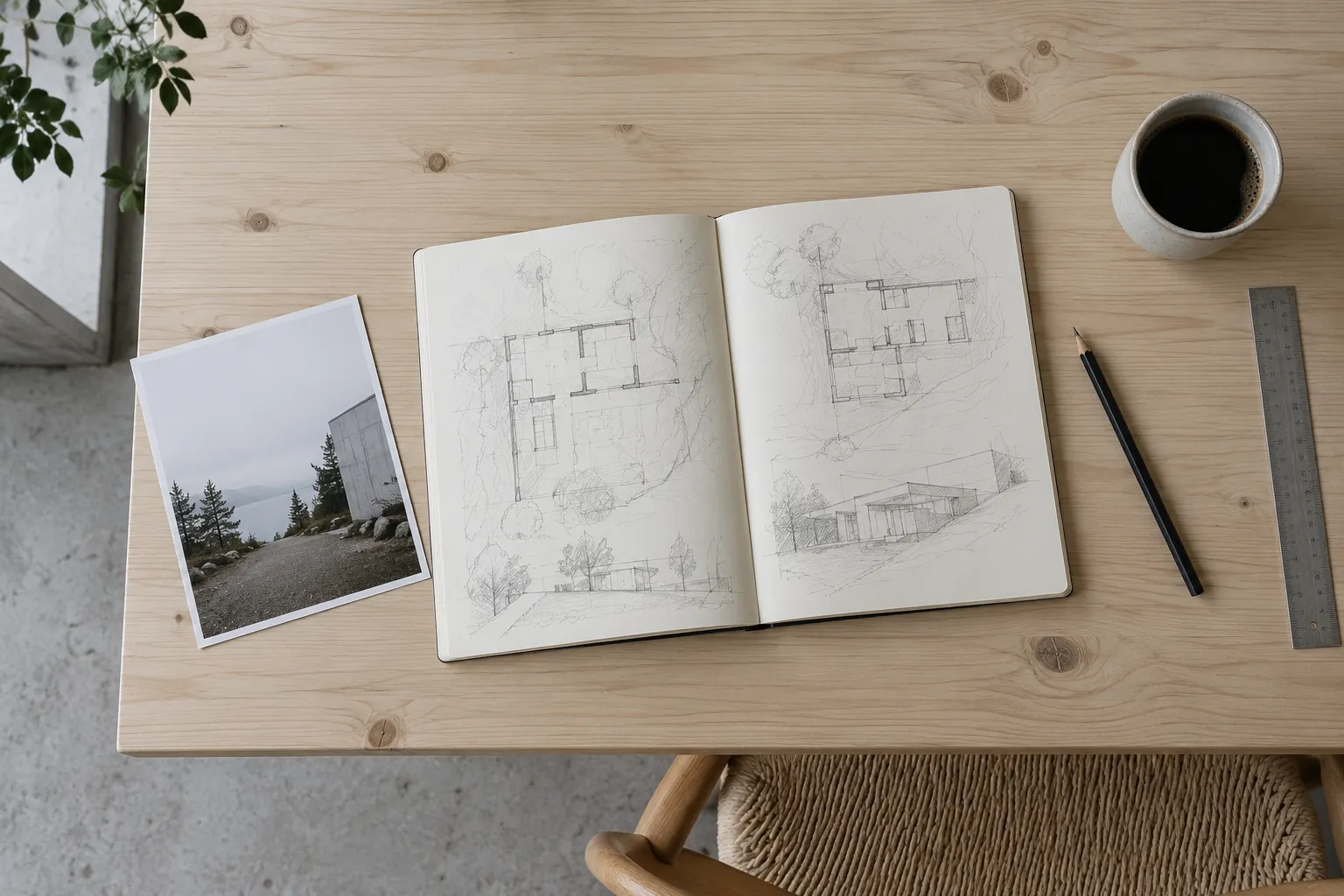
Most people arrive at our studio with a list: four bedrooms, an open kitchen, a home office, a double garage. It is a useful start, but it describes a floor plan, not a home. The most rewarding projects begin with clients who can tell us how they want to live.
A good brief does not need to be long or polished. It needs to be honest about your life today, the life you expect in fifteen years and the limits you are working within.
Do not worry about sounding unrealistic. Part of our job is to test ambitions against the site and the budget, and the wishes that seem least practical often lead to the best ideas once we understand what lies behind them.
Describe days, not rooms
Write down an ordinary weekday and a perfect Sunday. Where do you drink your first coffee? Who cooks, and does anyone keep them company? Where do the children do homework? Where do wet boots go in November? These small habits shape a house far more than a room count.
- Your daily routine, room by room, through the seasons.
- Places and houses you have loved, and what exactly you remember about them.
- Things you dislike about where you live now.
- Possessions that need a home: books, instruments, a piano, boats, bicycles.
- How long you plan to stay, and whether parents or grown children may move in.
Be clear about money
Give your architect a total budget that includes construction, fees, permits and a contingency of around ten percent. Without it, the first design will be either too modest or too expensive, and both waste time. In Denmark and Norway in 2026, a well-built architect-designed house typically costs between $4,500 and $7,000 per square metre to construct.
We would rather design a beautiful 160 square metres than a compromised 240.
Bring the site
If you already own land, bring photographs taken at different times of day and year, the survey if you have one and any local planning rules. Better still, invite us to walk it with you. Views, wind, neighbours and the path of the winter sun will shape the house more than any drawing we bring to that first meeting.
Finally, decide who makes decisions. Couples often disagree, and that is healthy, but the architect needs to know whose voice settles a question. Agree that between yourselves early, and the whole project will move more calmly.